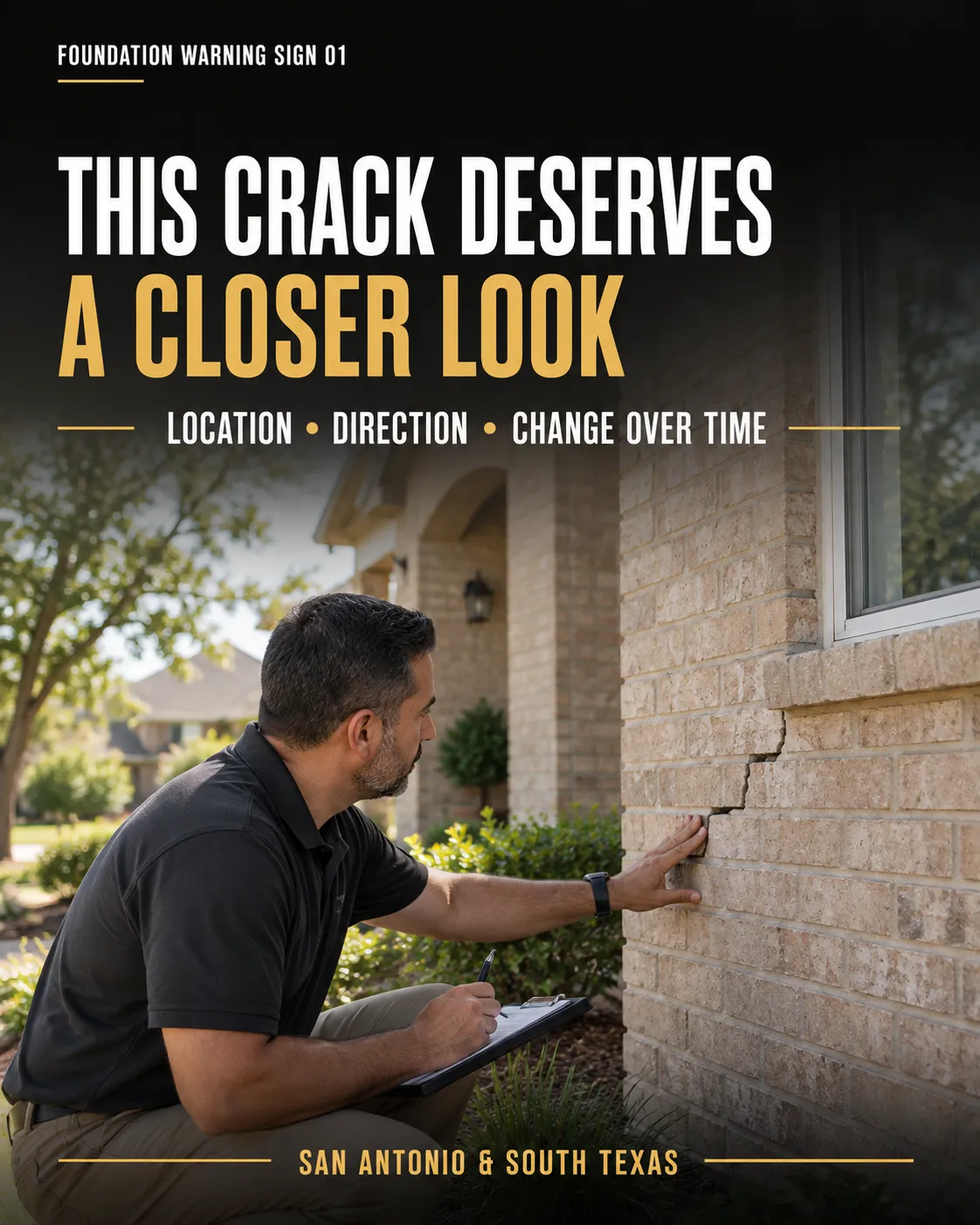
Foundation Cracks Guide for South Texas Homes
Home Maintenance, Foundation Cracks, San Antonio Foundation Repair
Foundation Cracks 101: A Calm, Clear Guide for South Texas Homeowners
Not every crack in your home’s foundation is a sign of disaster. In the heat and clay soils of San Antonio and South Texas, small foundation cracks are common—but knowing which ones to watch and which ones need a professional foundation inspection can protect both your home and your peace of mind.
Understanding Foundation Cracks
What South Texas homeowners should know before they panic
📌 Key Takeaway: The U.S. Geological Survey notes that expansive clays—like those common in Bexar County and across South Texas—are one of the leading causes of structural damage to homes in the U.S., costing homeowners an estimated $2–3 billion per year in repairs (USGS, “Expansive Soils” fact sheet).
First Things First: How to Evaluate Foundation Cracks Calmly
When you spot a crack, take a breath and look at three basics: width, length, and context. Hairline cracks in concrete—about the thickness of a sheet of paper—often come from normal curing or minor seasonal movement. Wider cracks, especially those you can fit a coin into, deserve closer attention. Also note whether the crack is only in the surface coating (like drywall or stucco) or appears in the actual foundation or brick itself. Surface-only cracks are usually less serious than cracks that run through structural elements.
💡 Pro Tip: The American Society of Civil Engineers (ASCE) and many structural engineers use about 1/8 inch (≈3 mm) as a practical threshold: cracks wider than this, or cracks that are offset (one side higher than the other), are more likely to need professional evaluation rather than simple monitoring.
What Location and Direction of Cracks Can Tell You
The location of foundation cracks gives helpful clues. Cracks near corners, around windows and doors, or along long exterior walls are common in South Texas because of soil movement and temperature swings. A single small crack by a window may be harmless, while multiple cracks in several rooms can hint at broader foundation movement. The direction matters too. Vertical cracks that are narrow and fairly straight often relate to normal settling. Horizontal cracks, especially in basement or retaining walls, can indicate pressure from soil pushing inward and should be taken more seriously. Diagonal or stair-step patterns in brick or block can signal that one part of the foundation is moving differently than another area.
“In regions with expansive clay, like much of Texas, we see more diagonal and stair-step cracking associated with differential settlement than in regions with more uniform soils.”
— Summary of findings from the Texas A&M Transportation Institute and Texas Section of ASCE discussions on expansive soils and structural movement
Common Types of Foundation Cracks You Might See
Hairline cracks: Very thin, often from concrete curing or minor shrinkage. These are common and usually not a structural concern unless they widen or multiply quickly.
Vertical cracks: Run mostly up and down. In many slab and stem wall foundations, narrow vertical cracks can be related to normal settling, but wider or offset cracks should be evaluated.
Horizontal cracks: Run side to side. These can be more serious, especially in walls that hold back soil, and often justify a prompt foundation inspection.
Stair-step cracks: Follow the mortar joints in brick or block in a zigzag pattern. In our expansive South Texas soils, stair-step cracks can indicate differential settlement and should be checked by a professional.
📌 Key Takeaway: According to guidance from the Concrete Foundations Association, it’s the pattern plus the behavior over time—not just the existence of a crack—that helps engineers distinguish between cosmetic issues and structural problems.
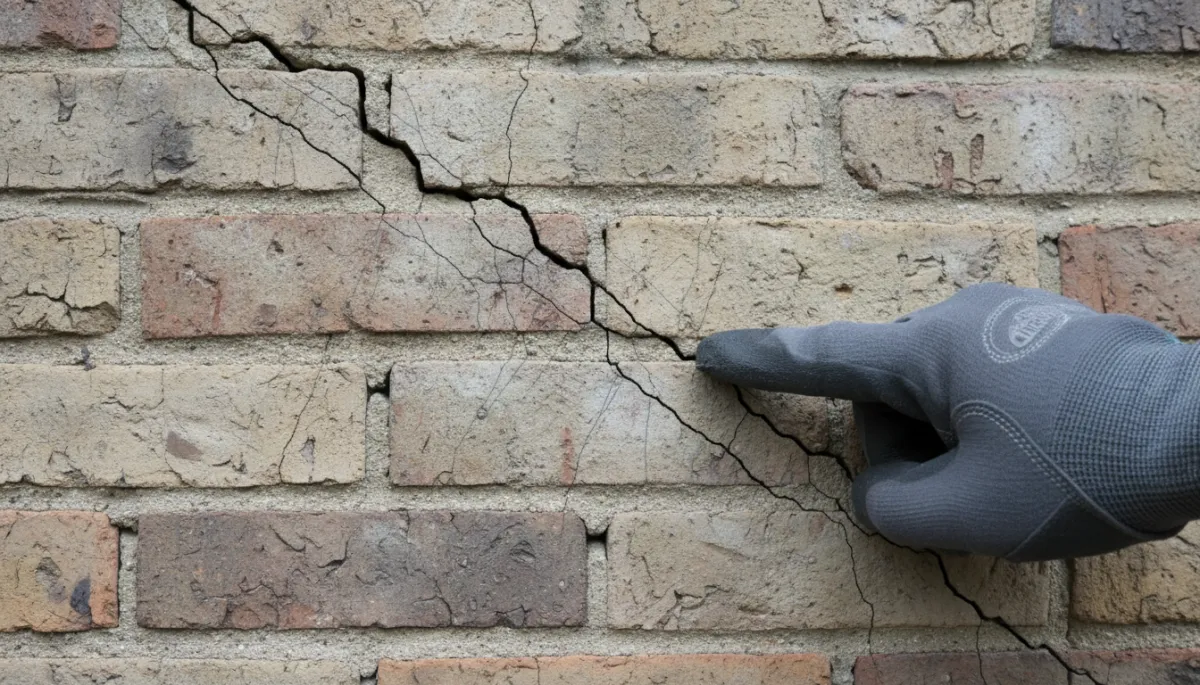
Different crack patterns can signal normal settling or emerging foundation issues.
How to Tell If a Crack Is Changing Over Time
Movement over time is often more important than what you see today. A simple, homeowner-friendly method is to mark and date the ends of a crack with a pencil or painter’s tape, then take clear photos. Recheck every few weeks, especially after heavy rain or drought. If you notice the crack getting longer, wider, or spawning new cracks nearby, that’s valuable information to share with a San Antonio foundation repair specialist. Doors sticking more often, new gaps at trim, or sloping floors alongside growing cracks can all point toward active foundation movement.
💡 Pro Tip: Many structural engineers use inexpensive crack monitors (small plastic gauges) to track changes as small as 0.5 mm. You can mimic this at home with careful photos and measurements, then bring that “mini data set” to your local foundation expert.
Monitor or Call for Help? Knowing When to Get an Inspection
As a general rule, small, stable hairline or vertical cracks can often be monitored. Keep notes, snap photos, and watch for changes. However, you should consider a professional foundation inspection if you see horizontal cracks, significant stair-step cracks in brick, cracks wider than about 1/8 inch, or cracks that are actively growing. It’s also wise to call if multiple symptoms show up at once—like sticking doors, separated baseboards, and uneven floors. Getting an expert opinion early doesn’t mean you’re signing up for major repairs; it simply gives you clear answers and options.
A national survey by the Foundation Repair Association and industry partners has found that early intervention and drainage corrections alone can prevent or greatly reduce the need for structural underpinning in a significant share of homes showing early signs of movement.
📌 Key Takeaway: Industry case studies routinely show that addressing issues early is almost always less expensive than waiting until cracks widen, floors tilt, and doors no longer close properly.
Why Local Expertise Matters in South Texas Soil
Homes in San Antonio and across the South Texas foundation landscape deal with expansive clay, long dry spells, and sudden heavy rains. All of these can cause the soil under your home to swell, shrink, and shift. That’s why working with a local team that understands our climate and soil is so important. Steel Country Foundation Services focuses on San Antonio foundation repair and South Texas foundation conditions every day, so they know how to distinguish typical seasonal movement from warning signs that need attention.
Research summarized by the Federal Emergency Management Agency (FEMA) and the U.S. Army Corps of Engineers highlights that regions with high-plasticity clays—like Central and South Texas—experience greater seasonal foundation movement than many other parts of the country. That makes local experience a practical advantage when interpreting what your cracks really mean.
Steel Country Foundation Services offers complimentary foundation inspections for homeowners, giving you a no-pressure way to get professional eyes on your foundation cracks.
A Reassuring Final Thought
Living in South Texas means you will almost certainly see some foundation cracks over the life of your home. Many are simply the result of normal settling and climate, not structural failure. By paying attention to the type, direction, and changes over time, you can separate cosmetic issues from potential problems. And if you’re ever unsure, reaching out to Steel Country Foundation Services for a complimentary foundation inspection in the San Antonio area is an easy, low-stress way to get clear answers and protect your most important investment.
📌 Backed by Data: National insurance and engineering reports consistently show that water and soil movement cause more damage to homes each year than earthquakes, floods, hurricanes, and tornadoes combined (a statistic frequently cited by the Insurance Information Institute and geotechnical researchers). Understanding your foundation cracks—and getting a trusted local inspection when needed—is one of the simplest ways to stay ahead of those risks.
